German Economy at a Crossroads in 2026 Amid Recovery Expectations
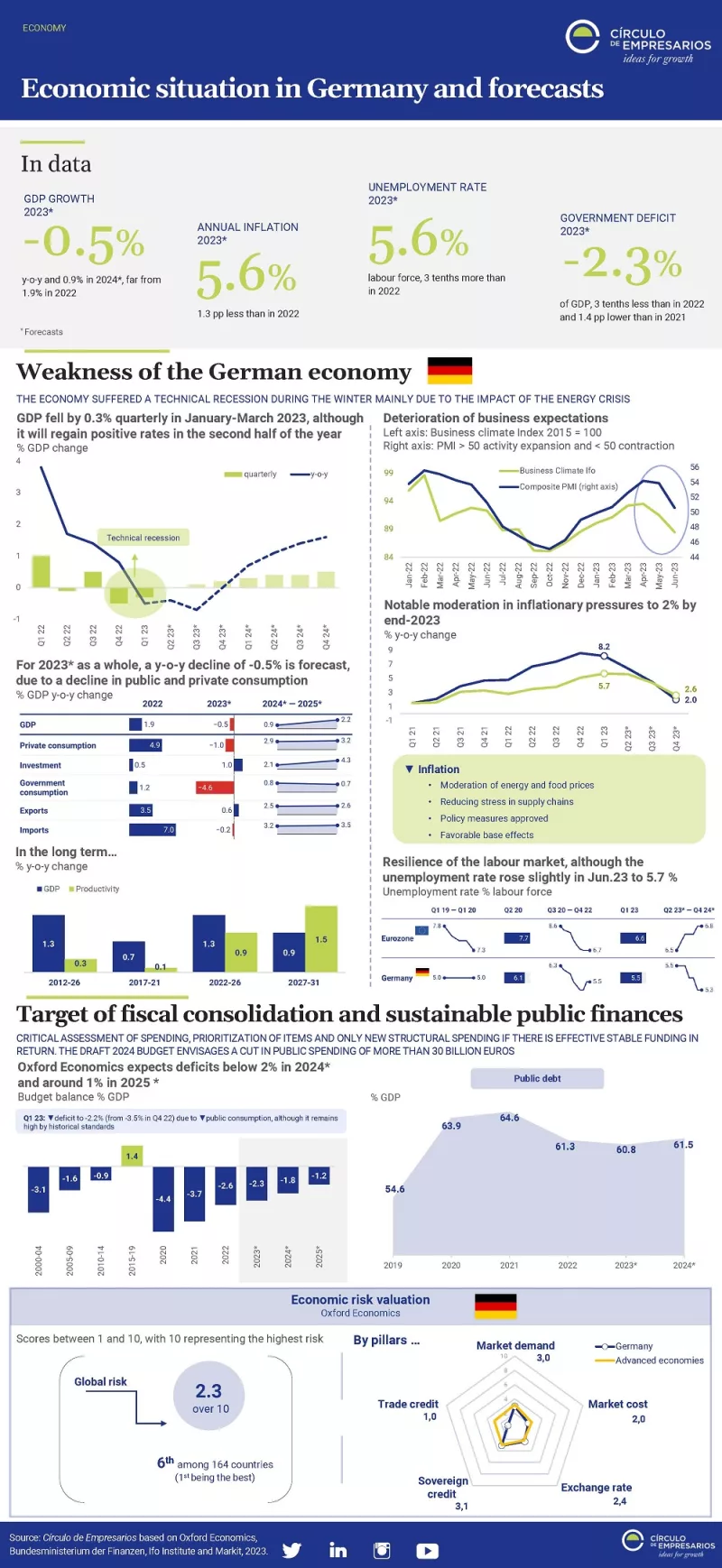
The German economy is approaching a pivotal phase as 2026 draws near, following years of sluggish performance amid a volatile global environment where domestic factors intersect with external challenges.
Analysts are closely watching whether the German economy can regain momentum through more flexible fiscal and investment policies led by the government in coordination with the private sector, especially as competition intensifies from technologically advanced Asian markets.
The Role of Government Policies
Experts believe government policies will be decisive in shaping the future of the German economy, particularly in areas such as public spending, infrastructure development, and structural reforms aimed at boosting productivity and encouraging long-term investment.
Deutsche Bank’s Outlook for 2026
According to Deutsche Bank’s global forecasts, Germany is expected to reach a turning point in 2026.
The bank’s chief German economist notes that while the economy has emerged from recession, a genuine recovery is likely to begin next year.
The bank anticipates GDP growth of around 1.5 percent, alongside relative stability in the labor market, supported mainly by a significant increase in government spending, while private consumption and investment are expected to contribute only modestly in the near term.
Investment and Innovation as Growth Drivers
Rising corporate investment in intellectual property and innovation is seen as an encouraging development, increasingly offsetting weaker investment in equipment and supporting medium-term competitiveness.
Between cautious optimism and concerns over limited recovery, Germany’s growth trajectory will largely depend on effective economic policies and the ability of businesses to adapt to global shifts.